With Joy and Anticipation
Several themes emerge from the readings of the 32nd Sunday (the third to last Sunday) of the liturgical year: commitment, faithfulness, perseverance, and readiness. Since these are all hallmarks of the wise, Wisdom may well be considered the overriding theme.
The First Reading (Wis 6:12–16) focuses on divine wisdom. The anonymous author of the deuterocanonical book of the same name effectively addresses the question of the happiness of the just versus the misery of the unjust. Living in an environment that prized a materialistic lifestyle, he counters it by providing a rational basis for a life of faith. The author was likely a Jew based in Alexandria, an Egyptian city then in the grip of worldly-wise Hellenism. While the Greeks viewed wisdom primarily as a product of human reason and intellectual contemplation, this author presents Wisdom as a practical way of life rooted in covenantal revelation. He goes on to identify wisdom with the Spirit of God. This is one of the many aspects of the faith that distinguishes it so sharply from surrounding idolatrous religions.
Wisdom is thus a form of divine revelation – God acting in the history of a world created by His wisdom. Wisdom prefigured the love of God and culminated in Jesus Christ, who is explicitly called the ‘Wisdom of God’ (cf. 1 Cor 1:24, 30). It is this Incarnate Wisdom who exhorts us in the Parable of the Ten Virgins: ‘Watch, therefore, for you know neither the day nor the hour.’
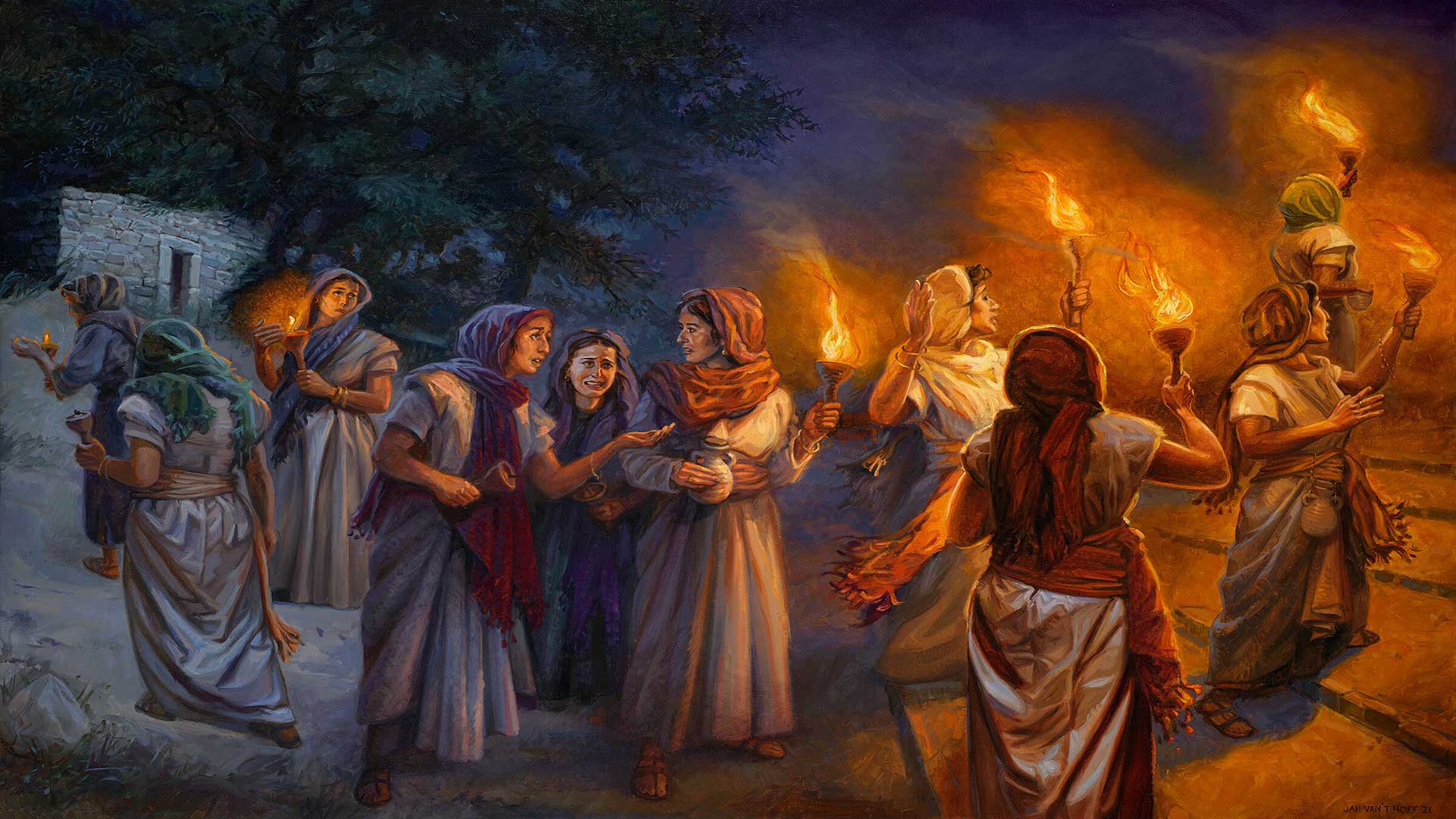
These words conclude today’s Gospel (Mt 25:1–13), a story exclusive to St Matthew regarding a sundown wedding ceremony. Traditionally, a bridegroom, accompanied by his family and friends, would walk to the bride’s home for preliminary rites. Afterwards, the bride would return with them in a nuptial procession through the streets to the groom’s home. The attendees carried their own torches, and upon arrival, bridesmaids welcomed and assisted the bride.
Interestingly, the parable makes no mention of the bride, perhaps because the narrative begins mid-journey with the groom's return. Furthermore, the focus remains entirely on the preparedness of the bridesmaids rather than the bride. Because the exact arrival time of the bridal party was unpredictable, it was essential for the bridesmaids to remain vigilant. Unfortunately, five of them were not.
When, where, and why did Jesus tell this parable? It is a continuation of the Discourse on the Mount of Olives (cf. Mt 24) regarding the end times. Jesus wanted His disciples to know that the ten virgins represent the visible Church on earth – encompassing both the faithful and the complacent – waiting for the Lord's return. The oil they carry represents not just interior grace, but faith active in works of mercy and almsgiving. This explains why the wise virgins could not share their supply; personal conversion, character, and righteous deeds cannot be borrowed or transferred on Judgment Day. Those who possess this active faith when the Groom (the Saviour) returns will be invited to the wedding feast (the Kingdom of Heaven). Christ is the Bridegroom, and His Bride is the Church – a fulfilment of the Old Testament imagery of God as the Husband of Israel.
As for believers today, what should we be doing when the world ends? Nothing extraordinary; we should simply go about our daily lives faithfully, grounding our routine actions in love.
And what about those who have died before us? In the Second Reading (1 Thes 4:13–18), St. Paul states that we have no reason ‘to grieve as others do who have no hope.’ To show that our ancestors have not died in vain, he writes that the dead in Christ will rise first, and the living will be ‘caught up together with them in the clouds to meet the Lord in the air.’ In the ancient world, citizens would go out of their city gates to meet an arriving emperor (apantesis) and joyfully escort him back into their home. Thus, Paul is not describing an escape from the world, but a glorious welcome-procession where the living and the dead rise to greet Christ as He descends to establish His final kingdom on earth.
‘Therefore,’ Paul concludes, ‘comfort one another with these words.’ However, to truly comfort one another, we must be united in mind and heart. Are all Christians aligned regarding doctrine? Are the Ten Commandments genuinely cherished and practised? Do we live with the reality of Heaven, the angels, and the saints in mind? Do we truly believe our purpose is to know, love, and serve God? Can we say with the Psalmist, ‘For you my soul is thirsting, O God, my God’? Are sin and grace treated as absolute realities, or as mere trivialities?
As the liturgical cycle draws to a close, the readings of these final Sundays veer toward the eschatological nature of God’s kingdom outlined in Matthew 25: the Parable of the Ten Virgins (Mt 25:1–13), the Parable of the Talents (Mt 25:14–30), and the Judgment of the Nations (Mt 25:31–46). Providing an excellent transition into Advent, these texts invite us to wait with joyful anticipation for the Lord’s coming.
